You have probably heard the word "blockchain" thrown around a lot in the last few years. You know it has something to do with Bitcoin and cryptocurrency. You might have heard people call it "the future of the internet" — or dismiss it as a passing fad.
But what is blockchain actually? How does it work? And why do some of the biggest companies in the world — IBM, Microsoft, Amazon, Google, JPMorgan — invest billions into blockchain research?
The answer is simple: blockchain is a new way of storing and sharing data that removes the need for a central authority. It is not just for cryptocurrency. It can be used for voting, supply chains, healthcare records, digital identity, and much more.
In this beginner-friendly guide, we will explain what blockchain is, how it works, and why it matters — all in plain English, without the hype.
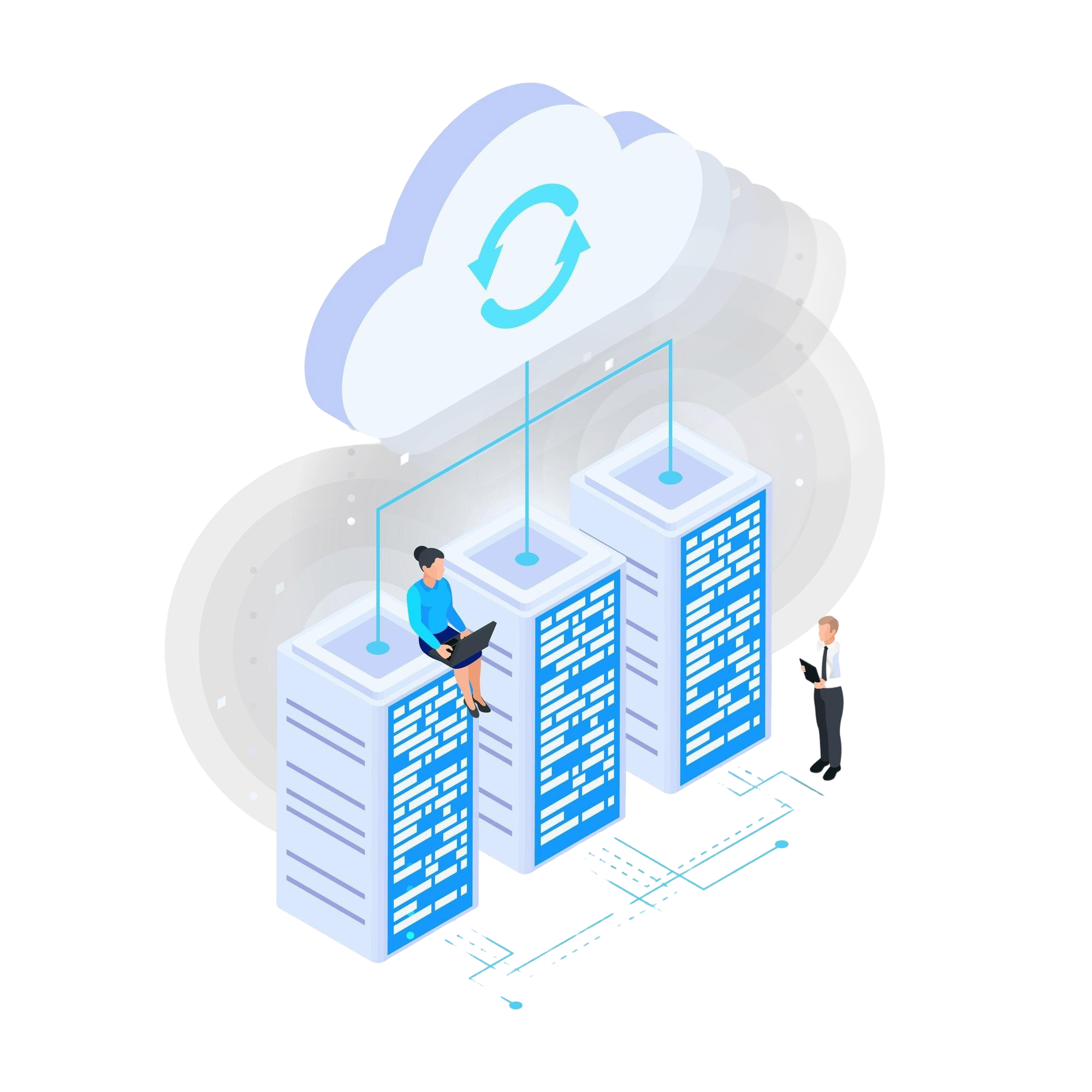
A blockchain is a distributed digital ledger that records transactions across many computers. Once a transaction is recorded, it cannot be changed or deleted — it is permanent.
Breaking it down:
In short, a blockchain is like a shared notebook that everyone can read, no one can erase, and no single person controls.
Imagine a village where everyone keeps track of money in their own notebooks. When someone wants to send money, they announce it to the whole village. Everyone writes it down in their notebook at the same time.
If someone tries to cheat by writing down a fake transaction, the other villagers compare their notebooks and immediately catch the lie. The fake entry is rejected.
This is exactly how a blockchain works. Instead of one central bank keeping records, thousands of computers keep identical copies. To cheat the system, you would have to alter every single copy — which is practically impossible.
Traditional systems rely on a central authority — a bank, a government, or a company — to verify and record information. That works well enough, but it has problems:
Blockchain solves these problems:
Let's walk through what happens when someone sends cryptocurrency on a blockchain.
Alice wants to send 1 Bitcoin to Bob. She signs the transaction with her private key — a digital signature that proves she owns the Bitcoin.
Alice's transaction is sent to a network of thousands of computers called nodes. Each node receives a copy.
Nodes check: Does Alice really own 1 Bitcoin? Has she already spent it? Is her signature valid? If everything checks out, the transaction is approved.
Approved transactions are grouped into a block. A block is like a page in the ledger, holding hundreds or thousands of transactions.
Once a block is full, it is cryptographically linked to the previous block using a hash. This creates a permanent chain — hence "blockchain."
Bob now has 1 Bitcoin. The transaction is permanently recorded on every node in the network. Anyone can verify it — but no one can change it.
There is no central server. Instead, thousands of computers work together to maintain the ledger. If one computer fails or is hacked, the network continues running.
Cryptography keeps the blockchain secure. Each user has a public key(like a bank account number) and a private key (like a password). Transactions are signed with the private key and verified with the public key.
A hash is a unique string of characters generated from data. Change even one letter in the data, and the hash changes completely. Hashing is how blocks are linked and secured.
Each block contains the hash of the previous block. If someone tries to alter an old block, its hash changes, breaking every subsequent block. This makes tampering nearly impossible.
How do thousands of computers agree on the same ledger? Through a consensus mechanism. The two main ones are:
Once a block is added, it cannot be changed. This is what makes blockchain trustworthy — history cannot be rewritten.
On most public blockchains (like Bitcoin or Ethereum), anyone can view every transaction. Addresses are pseudonymous — you can see them, but you do not know who owns them.
| Type | Who Can Join | Example Use Case |
|---|---|---|
| Public | Anyone | Bitcoin, Ethereum |
| Private | One organization | Internal company ledger |
| Consortium | A group of organizations | Supply chain, banking networks |
| Hybrid | Public + Private mix | Healthcare records, voting |
The first and most famous blockchain. Created in 2009 by the pseudonymous Satoshi Nakamoto. Designed as digital money — a peer-to-peer payment system without banks.
Launched in 2015, Ethereum introduced smart contracts — self-executing programs that run on the blockchain. This opened the door to decentralized apps (dApps), DeFi, NFTs, and more.
A fast, low-cost blockchain designed for high throughput. Popular for DeFi and NFT projects that need speed.
A "Layer 2" solution for Ethereum. It makes Ethereum transactions faster and cheaper by processing them off the main chain.
An enterprise-grade blockchain from the Linux Foundation. Used by IBM, Walmart, and others for business applications.
Blockchain is not just for crypto. Here are real applications already in use.
Walmart uses blockchain to track food from farm to shelf. When a recall is needed, they can identify the source in seconds instead of days.
Blockchain can store medical records securely, giving patients control over who sees their data. It also prevents prescription fraud.
Governments are exploring blockchain for digital IDs that cannot be forged. Estonia already uses blockchain for citizen identity and voting.
Blockchain-based voting could prevent fraud and allow verifiable, transparent elections.
Property records on blockchain can reduce fraud, speed up transfers, and eliminate the need for title insurance.
NFTs (Non-Fungible Tokens) use blockchain to prove ownership of digital items — art, music, collectibles, virtual land.
Sending money internationally through banks takes days and costs 5-10%. Blockchain-based payments settle in minutes for a fraction of a cent.
A smart contract is a program that runs on a blockchain. It automatically executes when certain conditions are met — no human intervention needed.
Think of a vending machine. You insert money, select a snack, and the machine dispenses it. There is no cashier — the machine enforces the rules automatically.
Smart contracts do the same thing, but for complex agreements. Examples:
Smart contracts remove the need for middlemen and reduce the cost of doing business.
| Advantages | Disadvantages |
|---|---|
| No central point of failure | Slow compared to traditional databases |
| Data cannot be altered | Energy-intensive (Proof of Work) |
| Transparent and verifiable | Complex to build and maintain |
| Resistant to censorship | Regulatory uncertainty |
| Removes middlemen | Irreversible mistakes |
| Global and borderless | Learning curve for developers |
Yes — but not the way most people think.
Blockchain will not replace every database. It will not make banks disappear. But it will quietly become the backbone of many systems that need trust without a trusted third party.
You will see it in:
It will not happen overnight. Adoption is slow, regulation is unclear, and many projects fail. But the underlying technology is here to stay.
Blockchain is a powerful new way of handling data — one that replaces trust in institutions with trust in mathematics. It is not a solution to every problem, but for the right problems, it is revolutionary. Understanding the basics helps you separate the hype from the reality and see where this technology is genuinely changing the world.